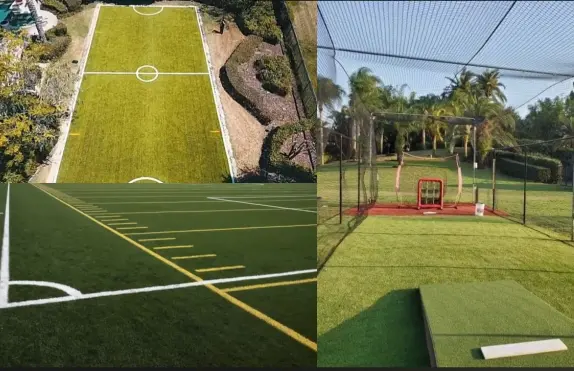
Artificial Sports Field Orlando, FL
Synthetic Turf for Athletic Fields, Training Areas & Sports Facilities
Sports fields need surfaces that can handle regular activity. Artificial sports field installation in Orlando can provide a consistent synthetic playing surface for athletic facilities, schools, training centers, recreation properties, private sports facilities, and other outdoor areas.
Orlando's heat, sunlight, humidity, and periods of heavy rainfall should also be considered when planning an outdoor athletic surface.
Sports Turf Planning
- Intended sport and field use
- Expected player traffic
- Base preparation
- Drainage and grading
- Turf construction
- Infill requirements
- Field markings
- Maintenance planning
Artificial Sports Turf Installation in Orlando
Sports facilities can have very different requirements. A soccer training field may need a different turf system from a small multi-purpose practice area.
Turf should be selected according to the sport, expected traffic, drainage needs, field design, and maintenance requirements.
Why Choose Artificial Turf for a Sports Field?
Natural sports fields can become worn when they receive frequent use. Synthetic turf can provide an alternative for facilities that need a durable outdoor playing surface.
Consistent Playing Surface
Artificial sports turf can provide a more consistent surface compared with natural grass that changes with weather and growing conditions.
Frequent Use
A properly selected sports turf system can be designed for regular athletic activity.
Less Routine Mowing
Synthetic turf does not grow, eliminating routine mowing of the playing surface.
Training Availability
Facilities can reduce dependence on natural grass recovery between regular training sessions.
Predictable Appearance
Synthetic turf can maintain a consistent appearance when properly maintained.
Planned Performance
Turf, base, drainage, infill, and field design can be planned around the intended athletic application.
Sports Turf Is Different From Landscape Turf
A standard residential artificial lawn is not automatically suitable for an athletic field.
Important Sports Turf Factors
- Turf construction
- Fiber characteristics
- Pile height
- Density
- Infill
- Shock absorption
- Drainage
- Base preparation
- Traffic levels
- Maintenance requirements
- Intended sport
Designed Around the Activity
The field should be designed around the activity rather than choosing a product first and trying to adapt it later.
Soccer, football, baseball, softball, training areas, schools, and multi-use fields can all have different requirements.
Proper planning helps create a sports surface that matches the intended use of the property.
Artificial Soccer Field Turf Orlando
Soccer fields experience repeated running, cutting, stopping, and directional changes. Turf selection should account for the expected traffic and playing requirements.
Full-Size Fields
Large athletic surfaces planned around the facility's requirements.
Small-Sided Fields
Smaller fields for training, recreation, and organized practice.
Training Fields
Dedicated synthetic areas for repeated soccer training sessions.
Soccer Academies
Training environments designed around regular player activity.
Private Facilities
Customized turf areas for private coaching and athletic programs.
Community Recreation
Sports areas planned around community use and available space.
Field dimensions, markings, turf system, infill, base, and drainage should be determined according to the project requirements.
Artificial Football Field Turf
Football fields experience high levels of athletic activity. Players repeatedly accelerate, stop, change direction, and make contact with the playing surface.
- Field dimensions
- Playing lines
- Turf construction
- Infill
- Drainage
- Base preparation
- Player traffic
- Maintenance
Artificial Turf for Baseball and Softball Areas
Synthetic turf can also be used in selected baseball and softball applications.
- Training zones
- Practice areas
- Bullpens
- Batting areas
- Base paths
- Infield sections
- Player warm-up areas
Not every field requires a completely synthetic surface. A project can combine artificial turf with natural grass or other surfaces.
Multi-Sport Artificial Turf Fields
Some facilities need one field to support several activities. A multi-purpose synthetic field can be planned around different sports and training requirements.
Soccer
Field layouts and markings can be incorporated into the project design.
Football
Planning can account for athletic traffic and sport-specific requirements.
Field Hockey
Surface planning should reflect the intended activity and facility use.
Training Activities
Flexible areas can support drills, conditioning, and organized training.
Different sports may have different surface and layout requirements. Field markings should be planned before installation.
Sports Training Areas
You do not always need a full athletic field. Smaller synthetic turf areas can provide useful training space.
Speed Training
Dedicated running and conditioning areas for athletic programs.
Agility Areas
Space for drills involving changes in direction and movement.
Skills Training
Smaller areas for sport-specific exercises and practice.
Warm-Up Areas
Synthetic surfaces around athletic facilities can add useful training space.
Private Practice
Smaller sports turf installations can support personal training.
Conditioning
Flexible turf areas can support regular fitness and conditioning drills.
Sports Turf and Orlando's Climate
Outdoor sports fields in Central Florida experience demanding weather conditions that should be considered during field design.
Strong Sunlight
Outdoor turf is exposed to direct sunlight and UV exposure.
High Temperatures
Surface conditions can change during hot Florida weather.
Heavy Rainfall
Water management should be considered during field planning.
Frequent Traffic
Turf selection should reflect the amount and type of athletic use.
Base preparation, grading, drainage, infill, maintenance, and the surrounding environment also matter.
Why Drainage Matters on an Artificial Sports Field
Drainage is a major part of sports field planning. Orlando's heavy rain can create significant water-management challenges on large outdoor surfaces.
Site Grading
Proper grading helps direct surface water toward the planned drainage system.
Aggregate Base
The base can support both field stability and water movement.
Perimeter Drainage
Some sites may require additional drainage around field edges.
Subsurface Drainage
Drainage design can include systems below the playing surface when needed.
Stormwater Planning
Existing stormwater systems should be considered during site planning.
Low Areas
Low spots and existing water flow should be identified before installation.
The correct drainage approach depends on the property, soil, grading, existing infrastructure, and project design.
Sports Field Base Preparation
The surface underneath the turf plays an important role in the finished field.
- Stability
- Proper grading
- Surface consistency
- Drainage
- Support for the turf system
Build the Field From the Ground Up
Base requirements depend on the site and intended sports application.
Simply installing synthetic turf over an unsuitable surface can lead to problems later.
Discuss Your ProjectArtificial Sports Turf Selection Guide
The final turf specification should be based on the actual project rather than a one-size-fits-all approach.
| Application | Key Considerations |
|---|---|
| Soccer | Ball interaction, durability and drainage |
| Football | Traffic, durability and field markings |
| Baseball | Sport-specific areas and traffic |
| Softball | Training and playing requirements |
| Multi-Sport | Versatility and field markings |
| Training Area | Traffic and intended drills |
| School Field | Use, safety requirements and maintenance |
| Recreation Field | Traffic and general durability |
How Artificial Sports Field Installation Works
Each project is planned around the site, intended sport, field dimensions, drainage, turf system, and expected use.
Project Assessment
Review the property, intended sport, field dimensions, access, existing surface, drainage, and project goals.
Field Planning
Establish the field layout and turf requirements according to intended use.
Surface Preparation
Existing grass, unsuitable material, or surface conditions may need to be removed or corrected.
Excavation and Grading
The area is prepared to achieve the required grade and elevation.
Base Installation
The appropriate aggregate base is installed and compacted.
Drainage Installation
Drainage requirements are addressed according to the site and field design.
Turf Layout
Synthetic turf sections are positioned according to the field layout.
Seaming
Turf sections are joined carefully to create a consistent surface.
Field Markings
Permanent or integrated markings can be incorporated according to the field design.
Infill Installation
The appropriate infill system is installed according to the turf and application.
Grooming
Turf is brushed and cleaned as part of final preparation.
Final Inspection
The completed field is inspected before being put into use.
Artificial Sports Field Maintenance
Synthetic turf can reduce some routine lawn tasks, but sports fields still require regular maintenance.
Debris Removal
Keep the field clear of leaves, trash, and other debris.
Brushing
Regular brushing can help maintain turf fiber position.
Infill Management
Heavily used areas may require monitoring and infill management.
Cleaning
Frequently used areas may require periodic cleaning.
Seam Inspection
Inspect seams and high-use areas as part of routine maintenance.
Drainage Checks
Monitor drainage performance and address issues early.
A heavily used athletic facility will generally require more attention than a private practice area.
How Often Should an Artificial Sports Field Be Maintained?
There is no single schedule for every field. Maintenance frequency depends on the number of users, hours of use, sport, weather, turf system, infill, debris, and field conditions.
Regular Inspection Helps
Facilities should follow the maintenance recommendations for the specific turf system installed.
Regular inspection can help identify small problems before they become larger repairs.
Artificial Turf Sports Field vs Natural Grass
Neither surface is automatically right for every athletic facility. The best option depends on sport, budget, use, climate, maintenance, and site conditions.
| Factor | Artificial Sports Turf | Natural Sports Grass |
|---|---|---|
| Mowing | Not required | Required |
| Irrigation for Growth | Not required | Required |
| Traffic Recovery | Does not grow back | Requires recovery |
| Appearance | Consistent when maintained | Changes with conditions |
| Rain Impact | Depends on drainage system | Can become soft or muddy |
| Maintenance | Requires turf maintenance | Requires lawn and field maintenance |
| Initial Installation | Higher | Usually lower |
| Field Use | Can support frequent use depending on the system | Limited by recovery needs |
| Replacement | Turf eventually requires replacement | Grass is continuously grown and maintained |
Is Artificial Turf Good for Sports Fields?
It can be. Synthetic turf is widely used for athletic and recreational applications, but the specific system matters.
How Much Does an Artificial Sports Field Cost in Orlando?
Sports field installation costs vary significantly.
A small training area will have very different requirements from a complete athletic field.
Large sports projects should be evaluated individually. A site assessment and detailed scope provide a more useful estimate than a simple square-foot price.
Factors That Affect Cost
- Field size
- Existing surface
- Excavation
- Site grading
- Base construction
- Drainage
- Turf specification
- Infill
- Field markings
- Site access
- Existing infrastructure
- Project complexity
Artificial Sports Turf for Schools
Schools may use synthetic turf for athletic fields, practice areas, recreation spaces, and selected training zones.
Student Use
Consider the number and type of activities planned for the field.
Sports Schedules
Field planning should account for regular practices and events.
Drainage
Water management is important for outdoor athletic facilities.
Maintenance
Establish a maintenance program based on expected use.
Field Markings
Markings should be incorporated into the field design.
Accessibility
Project planning should account for applicable accessibility requirements.
Artificial Sports Fields for Parks and Recreation
Parks and recreation facilities can experience high levels of public use. Synthetic turf may be considered for selected athletic and recreational areas.
Artificial Turf for Private Sports Facilities
Private athletic facilities can use synthetic turf for dedicated training areas or complete playing surfaces.
- Training programs
- Athlete traffic
- Practice schedules
- Field dimensions
- Multiple sports
- Private coaching
- Recreation
Commercial Sports Turf Orlando
Sports facilities are also commercial properties. If your project is for a business, sports academy, apartment community, hotel, or other commercial property, the field may need to be planned around both athletic performance and property operations.
Explore Commercial TurfArtificial Sports Field Design Considerations
Before beginning a project, several important questions should be answered.
Choosing an Artificial Sports Field Installer in Orlando
Choosing an installer should involve more than comparing turf prices. Ask questions about the complete field system.
Sports Experience
Ask whether the installer works with sports-specific turf systems.
Base Preparation
Understand how the base will be prepared and compacted.
Drainage Planning
Ask how site drainage and water management will be addressed.
Turf System
Ask why the proposed turf is suitable for the intended sport.
Infill
Understand which infill system is included in the project.
Field Markings
Confirm how sport-specific markings will be incorporated.
Ask how the proposed turf, base, drainage, infill, markings, and maintenance plan match your intended use.
Sports Turf Installation for Florida Conditions
Florida athletic fields need to be planned for the local environment.
UV Exposure
Select turf intended for outdoor conditions and regular sun exposure.
Heat
Understand how the surface may behave during hot weather.
Rain
Provide appropriate drainage and water management for the property.
Traffic
Choose a turf system based on expected athletic use.
Can Artificial Sports Turf Be Used After Heavy Rain?
The answer depends on the field's complete drainage design, weather conditions, and the specific turf system.
A properly designed field should allow water to move through the turf and underlying system. However, extreme rainfall can challenge any outdoor sports surface.
Field managers should inspect conditions before allowing play after significant storms.
More Artificial Turf Solutions in Orlando
Explore additional turf services for residential, commercial, and specialized applications.
Residential Artificial Grass
Low-maintenance synthetic turf solutions for Orlando homes and outdoor living spaces.
Residential Turf Services →Commercial Artificial Turf
Durable synthetic turf options for businesses, properties, and high-use outdoor areas.
Commercial Turf Solutions →Pet Turf Installation
Specialized artificial grass solutions for pet-friendly outdoor areas.
Pet Turf Installation →Orlando Areas We Serve
We provide artificial turf solutions throughout Orlando and surrounding Central Florida communities.
Service availability can depend on project size, site conditions, location, and overall scope.
Frequently Asked Questions
Quick answers to common questions about artificial sports field installation in Orlando.
What is artificial sports turf?
Artificial sports turf is synthetic turf designed for athletic and recreational applications. The system is selected according to the sport, traffic, field design, drainage, and intended use.
Is sports turf different from regular artificial grass?
Yes. Sports applications can require different turf construction, infill, base preparation, drainage, and maintenance than residential landscape turf.
Can artificial turf be used for soccer fields?
Yes. Synthetic turf can be used for soccer fields and training areas when the appropriate sports turf system is selected and properly installed.
Can artificial turf be used for football fields?
Yes. Artificial turf can be designed for football applications. Field dimensions, markings, drainage, turf construction, and expected traffic should be considered.
Can one artificial field support multiple sports?
It can. Multi-purpose fields can be designed around several activities, but the layout and turf system should account for each intended sport.
Does artificial sports turf need mowing?
No. Synthetic turf does not grow, so mowing is not required.
Does an artificial sports field need maintenance?
Yes. Maintenance can include brushing, debris removal, infill management, cleaning, seam inspections, drainage checks, and repairs.
How much does an artificial sports field cost in Orlando?
Costs vary according to field size, excavation, grading, base preparation, drainage, turf, infill, markings, access, and project complexity.
Does artificial sports turf drain rainwater?
Water can move through the turf, but field drainage depends on the entire surface and subsurface system.
Can artificial sports turf handle heavy use?
Some sports turf systems are designed for high levels of athletic activity. The turf should be selected according to the expected traffic and sport.
Does artificial turf get hot in Florida?
Synthetic turf can become hot under direct Florida sunlight. Surface temperature depends on weather, sun exposure, shade, turf characteristics, and surrounding conditions.
Can artificial turf be installed for a small training area?
Yes. Synthetic turf can be used for smaller athletic training and practice areas as well as complete fields.
How long does artificial sports turf last?
Lifespan depends on turf quality, use, traffic, weather, maintenance, and the specific application.
Plan Your Artificial Sports Field in Orlando
An athletic field needs to do more than look green. It needs to support the way athletes, coaches, students, and communities use the space.
Artificial sports field installation in Orlando can provide a practical synthetic surface for athletic fields, training areas, schools, recreation facilities, and private sports properties.
Drainage, base construction, turf selection, infill, field markings, and maintenance all matter.
+1 689-367-3783Request a Free Estimate